
There's a persistent idea that creative people work best in messy environments — that clutter signals a busy mind. And while some people genuinely do function well with physical disorder around them, most of us are not in that category. For the majority of workers, a cleaner workspace leads to better concentration, fewer distractions, and a lower mental load at the start and end of each day.
This isn't a moral judgement about tidiness. It's a practical observation backed by how our attention systems actually work.
Why Clutter Has a Real Cost on Your Attention
Every visible object in your environment is a potential input to your brain. When your desk is covered in papers, empty cups, tools from three different projects, and miscellaneous items that don't belong there, your visual cortex is processing all of it — even when you don't want it to. This creates a kind of low-grade cognitive noise that sits underneath your conscious focus.
Research from Princeton University found that multiple stimuli in the visual field compete for neural representation, which reduces the brain's ability to process and focus on any single item. In practical terms: the more stuff on your desk, the harder it is to concentrate on the one thing in front of you.
Disorganised spaces also tend to create decision fatigue. If every time you sit down you have to mentally navigate a pile of items — even just to ignore them — you're spending small amounts of attention on something that shouldn't require any. Over time, this adds up.
What 'Clean' Actually Means in This Context
A clean workspace doesn't mean a bare desk with nothing on it. It means a space where everything present is either actively in use or clearly has a purpose. The goal isn't minimalism for its own sake — it's intentionality. A desk with a computer, a notebook, a lamp, and a coffee mug is clean in the relevant sense. A desk with those same items plus last week's mail, three cables going nowhere, two half-read books, a broken pen, and someone else's mug is not.
The key distinction is passive clutter: items that aren't being used, haven't been used recently, and won't be used soon — but are taking up visual and physical space anyway.
Surface Cleaning vs. Organisation
These are two different things that get confused. Surface cleaning is about hygiene — removing dust, wiping down surfaces, handling spills. Organisation is about structure — knowing where things are and keeping them there. You need both, but they address different problems.
A desk that's been organised but not cleaned will still harbour dust, bacteria on shared equipment, and residue on surfaces. A desk that's been cleaned but not organised will look tidy briefly before reverting to disorder. Sustainable workspace cleanliness requires attention to both.
The Keyboard and Phone Problem
Studies on office hygiene consistently find that keyboards and phones contain more bacteria per square inch than most household surfaces — including ones most people consider obviously dirty. This is partly because we touch these surfaces constantly and rarely clean them, and partly because they're difficult to clean without the right approach.

For keyboards: power off, shake out loose debris, and use compressed air followed by isopropyl alcohol on a microfibre cloth. Avoid oversaturating. For phones: a daily wipe with an appropriate screen-safe cleaner is genuinely worthwhile. For shared equipment, the same principle applies — just more frequently.
This matters beyond abstract hygiene. People who work in consistently cleaner offices report fewer sick days and, in shared environments, transmit respiratory and gastrointestinal illnesses at lower rates. Whether you're in a home office or a commercial setting, clean surfaces have practical health consequences.
Building Habits That Actually Stick
The challenge with workspace cleanliness isn't knowledge — most people know a clean desk is better than a messy one. The challenge is creating habits that don't require constant willpower to maintain. A few approaches that tend to work well:
The Two-Minute Rule at End of Day
Before you close your computer or leave your desk, spend two minutes clearing items that don't belong. This doesn't mean reorganising your entire filing system — it means putting away anything that accumulated during the day: cups to the kitchen, papers to their designated spot, items borrowed from elsewhere back to where they came from. Two minutes at the end of the day prevents twenty minutes of chaos at the start of the next.
One-In, One-Out for Physical Items
For people who tend to accumulate things at their desk, a useful rule is that bringing in a new item means removing another. This doesn't apply to consumables (pens, paper) but does apply to objects: new books, files, equipment. This naturally limits the slow creep of desk clutter over time.
Weekly 15-Minute Reset
Once a week, set a timer for fifteen minutes and focus entirely on the workspace. Wipe surfaces, sort papers, deal with items that have been sitting in limbo. This isn't a deep clean — it's a reset that prevents the accumulation of disorder that makes cleaning feel overwhelming.
Designated Spots for Regular Items
The single most effective organising principle is that every item that regularly sits on or near your desk has a designated place — and always goes back there. This sounds obvious but most cluttered workspaces are disorganised because items don't have homes, not because people are lazy. Once something has a spot, it's easy to return it there.
Shared and Commercial Workspaces
The above applies most directly to individual desks and home offices. In shared or commercial settings, maintaining a clean environment is more complex because it involves multiple people, communal areas, and higher foot traffic.
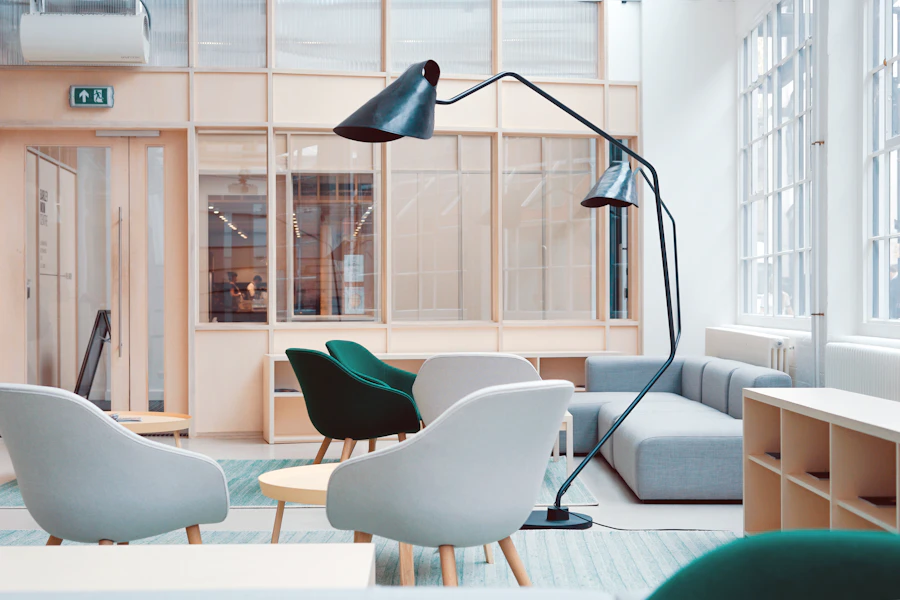
In these environments, a few things make a meaningful difference:
Common area responsibility. Shared spaces — kitchens, meeting rooms, breakout areas — deteriorate quickly without a clear system. Brief clean-as-you-go expectations (rinse your cup, wipe the table after a meeting) backed by visible reminders and easy-to-access supplies are more effective than relying on occasional deep cleans to fix accumulated mess.
Regular professional cleaning. There are things that daily tidying won't address: accumulated dust in ventilation areas, residue build-up on floors, grime on surfaces that aren't being wiped regularly. For commercial spaces, scheduled professional cleaning — weekly at a minimum for most offices — ensures these issues are dealt with before they become more significant.
Clear systems for communal items. Shared printers, stationery, and equipment should have obvious storage. When things don't have homes, they end up wherever someone last used them — which is usually not a useful place for anyone else.
The Psychological Side
Beyond the cognitive and physical benefits, there's a psychological element worth acknowledging. The state of our immediate environment has an effect on our mood and sense of control. A cluttered, dirty workspace can contribute to a low-grade feeling of being overwhelmed — particularly at the start or end of a busy period. Conversely, arriving at a clean, organised desk provides a subtle psychological reset.
This is partly about appearance — a space that looks ordered feels more conducive to productive work. But it's also about the tangible experience of working in a space without having to navigate around unnecessary items or avoid sitting in someone's spilled coffee from the previous week.
When to Bring in Professional Help
Individual habits address daily and weekly maintenance. But there are aspects of workplace cleanliness that fall outside what most people can or should handle themselves: deep cleaning tasks, commercial-scale floor treatment, sanitisation of shared facilities, or post-renovation cleaning in office spaces.
For businesses, professional cleaning is partly a practical necessity and partly a signal — to employees, to visitors, and to clients — that the space is being properly maintained. A clean office also reduces absenteeism, which has a real operational impact over time.
If you manage a commercial space and want to understand what a regular cleaning schedule might look like, our services page gives a clear breakdown of what's included and what to expect. Alternatively, get in touch and we can discuss what's practical for your specific setup.
For home office workers, professional cleaning makes sense for periodic deep cleans — particularly the shared areas of your home that affect the wider environment you work in.
Practical Summary
Keeping a workspace clean isn't complicated, but it does require a few deliberate habits:
- Clear visible clutter daily — even two minutes makes a difference
- Give every item a designated place
- Clean surfaces (including devices) on a regular schedule
- Run a weekly reset before disorder accumulates
- In shared spaces, establish clear common-area expectations
- Schedule professional cleaning for tasks beyond routine maintenance
The underlying principle is that a workspace in good order requires less effort to maintain than one that has been allowed to deteriorate. Starting with a clean slate and building habits to preserve it is considerably easier than cleaning up a significant mess every few weeks.
This article was written by the Korvynex team. We provide commercial and residential cleaning services across Canada. If you found this useful, you might also enjoy our article on practical home cleaning checklists or our piece on why professional cleaning supports healthier environments.